
Challenging Breathalyzer Test Results in a Pennsylvania DUI Case
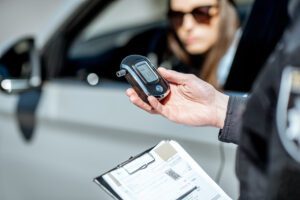
If you were recently charged with a DUI in Pennsylvania, you may feel like the breathalyzer reading sealed your fate. It has not. Challenging breathalyzer test results is not only possible but, in many cases, a skilled defense attorney can expose serious problems with how the test was administered, calibrated, or interpreted.
Understanding how breathalyzer challenges work and why they matter could significantly affect the outcome of your case.
What a Breathalyzer Test Actually Measures
A breathalyzer does not measure the alcohol in your blood directly. It estimates your blood alcohol concentration (BAC) based on the alcohol detected in your breath. Under 75 Pa.C.S. § 3802, a BAC of 0.08% or higher can result in a DUI charge in Pennsylvania. The consequences escalate at higher BAC tiers, with more severe penalties applied at 0.10% and again at 0.16%.
The problem is that breath-testing devices are not perfectly accurate. They rely on assumptions about human physiology that do not hold true for every person in every situation. That margin for error is exactly where a defense attorney starts building a case.
Breathalyzer Tests Are Not Foolproof
The legal process you see in movies often portrays breathalyzer results as ironclad evidence. In reality, these devices have known limitations, and courts have accepted challenges to breathalyzer results on multiple grounds. Here are some of the most common:
- Equipment calibration: Breathalyzer devices must be regularly calibrated and maintained. If records show the device was not properly serviced, the results may be unreliable.
- Operator error: The officer administering the test must follow specific protocols. Deviations from those procedures can compromise the accuracy of the reading.
- Observation period: Pennsylvania law requires you to be observed for a set period before the test to ensure that no recent mouth alcohol, burping, or vomiting could affect the results.
- Medical conditions: Certain conditions, such as acid reflux, diabetes, or a high-protein diet, can produce compounds in the breath that register as alcohol on some devices.
- Rising BAC: Alcohol continues to be absorbed into the bloodstream after you stop drinking. Your BAC at the time of testing may have been higher than it was while you were actually driving.
Any one of these factors could form the basis for challenging breathalyzer test results. In many cases, it is not just one issue but a combination of problems that, taken together, seriously undermine the reliability of the evidence. When that happens, prosecutors often have far less to stand on than they initially appear to.
The Legality of the Traffic Stop Matters
Before the breathalyzer is even part of the conversation, there is a more fundamental question: Did the officer have legal grounds to stop you in the first place?
Under the Fourth Amendment to the U.S. Constitution, law enforcement must have reasonable suspicion of a traffic violation or criminal activity before initiating a stop. If that standard was not met, any evidence gathered during the stop, including breathalyzer results, may be subject to suppression. A suppressed BAC reading can significantly weaken the prosecution’s case or result in charges being reduced or dismissed.
How to Challenge a Breathalyzer Test in Pennsylvania
Challenging breathalyzer results is not a simple process. It requires a methodical review of the facts, the equipment, and the law. Here is what that typically involves:
- Reviewing the officer’s training records and certification for the device used
- Requesting the maintenance and calibration logs for the breathalyzer
- Examining the dashcam or bodycam footage from the stop
- Evaluating whether proper observation procedures were followed
- Investigating whether a medical or physiological condition could explain the reading
- Assessing the timing of the test in relation to when the driving actually occurred
Each case is different. The strength of a challenge depends on the specific circumstances surrounding your arrest.
Pennsylvania’s Implied Consent Law
It is important to know that Pennsylvania has an implied consent law under 75 Pa.C.S. § 1547. By operating a vehicle on Pennsylvania roads, you have implicitly agreed to chemical testing if law enforcement has grounds to request it. Refusing a breathalyzer carries its own consequences, including automatic license suspension, regardless of whether you are ultimately convicted of DUI.
If you refused the test or submitted to a blood draw instead, your situation calls for a different, though equally thorough, defense strategy. The core principle remains the same: the evidence against you deserves to be scrutinized.
Why Does Your Choice of Attorney Matter?
When you are facing a DUI charge, the attorney you choose can shape everything that follows. Not every defense attorney approaches these cases the same way, and that difference matters more than most people realize.
At Marinaro Law Firm, Attorney Michael Marinaro brings a background that is genuinely rare in criminal defense. Before practicing law, he spent ten years as a forensic scientist with the Maryland State Police. That scientific foundation means he understands how breathalyzer technology works, where it fails, and how to identify weaknesses in the evidence that other attorneys might overlook.
With over 30 years of experience handling criminal defense cases in Lancaster County, Attorney Marinaro builds each case with the preparation required for trial. That level of preparation often produces results before a case ever reaches a courtroom.
Ready to Challenge Your Breathalyzer Results?
Your DUI case does not have to end with the number on that breathalyzer. Without the right attorney, you risk losing your license, your record, and your future to evidence that may not even hold up in court.
With Attorney Marinaro on your side, you get 30-plus years of experience and a rare forensic science background focused entirely on challenging breathalyzer test results and building the strongest defense possible. Schedule a consultation with Marinaro Law Firm today.


